Ethical Teachings of the Buddha
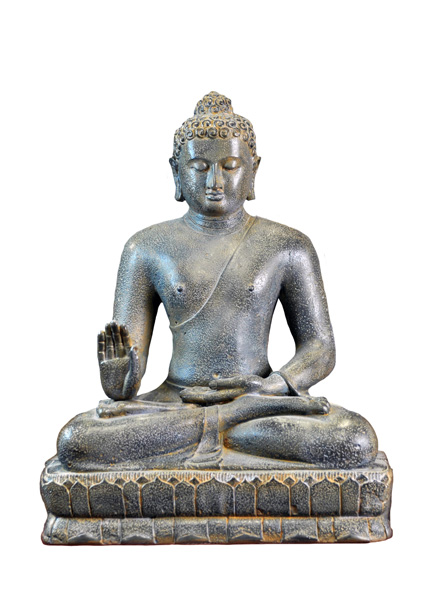
Image Caption
The Dhammapada tells us:
Refraining from every evil,
Accomplishing good,
Purifying the mind,
This is the teaching of buddhas.
This states the three facets of Buddhist ethics. Refraining from every evil is a matter of following precepts, rules of thumb that, when borne in mind and followed, help us to be harmless. Accomplishing good is generosity at work, responding to, and even seeking out, opportunities to be of benefit, particularly to others. Purifying the mind is developing virtue as a quality of character.
It is no exaggeration to say that developing and perfecting virtue is the central concern of Dhamma practice. In fact, refraining from evil and accomplishing good—aside from their immediate benefits—each serve as trainings to purify the mind, until virtue is internalized into intrinsic and spontaneous inclinations of character, and in its pure form subsumes the functions of the other two practices.
Let me draw an analogy. Mastering a musical instrument requires years of training. Learning the mechaninics of scales and cords might be compared to following precepts. Leaning to produce the aesthetic and entertaining qualities that the listener enjoys might be compared to practicing generosity. The virtuoso has perfectly internalized their skill and simply watches the music arise. Charlie Parker once said, “You don’t play the saxophone, it plays you.” Just as the virtuoso impovises without thought in response to the undfolding needs of the musical context, the one who has perfected virtue responds without thought to the unfolding needs of the (primarily social) environment.
In our culture, it is common to think of ethics as largely a matter of balancing self-interest against the interest of others. More for that guy means less for me. In fact, modern rational thought repeatedly tells us that the homo economicus is narrowly self-centered, but the “free market” makes it OK. For the Buddha this is entirely backwards: to benefit others is to benefit oneself, and to benefit oneself is to benefit others. This gives meaning to our choices. Spread over a lifetime, this is verifiably true.
Whereas virtue is not a reliable source of mundane or immediate sensual gratification, it leads to a life of meaning, fulfillment, and satisfaction, a life well-lived. These are supramundane pleasures, of a different quality, much deeper, and more persistent than mundane pleasures. Virtue is often envisaged in Buddhism as ensuring rebirth in a heavenly realm. The Buddha’s teachings in this regard seem to be close to what is known as virtue ethics in western thought, generally associated with Aristotle and Thomas Aquinas.