Meditation teachings
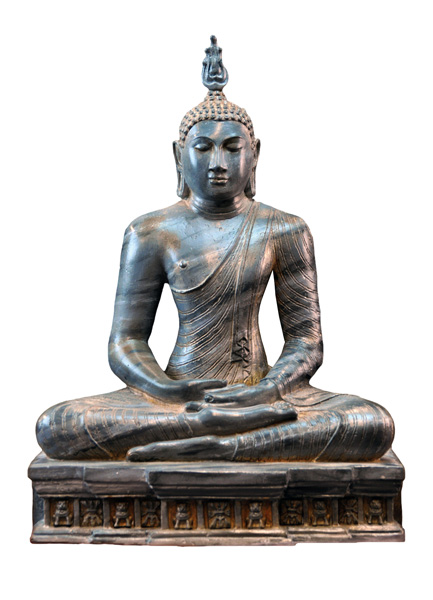
Image Caption
The En glish word “meditation” has two meanings that often, but not necessarily coincide. The more traditional corresponds to “contemplation,” “reflection,” “rumination,” essentially fixing single-mindedly on a theme and trying to get to the bottom of it. The more recent is found in altered states of consciousness, mystical experiences or trance-like states, and is associated either with religious experience or with secularized yoga practices. The traditional word in Pali that, like English “meditation,” encompasses both is jhāna, though the Buddha gave this a technical meaning alongside its colloquial use. The distinction between these two meanings of ‘meditation’ helps us sort out early Buddhist meditative practices.
First, the contemplations are practices of reflections on specific themes. The Pali word anupassanā (literally ‘seeing along’ or ‘watching’) applies to contemplative practice. Mettā (kindness) meditation, insight (vipassanā, or satipaṭṭhāna) meditation, often called “mindfulness” meditation are contemplations. The themes of these contemplations generally concern wisdom or virtue, and belong to one of the first five factors in the noble eightfold path. Mettā contemplation belongs to right intention, and vipassanā to right view.
Second, altered states of consciousness can arise in a variety of contexts and in association with a variety of practices, but most typically in early Buddhism in association with contemplative practices. The Pali word samādhi (literally ‘collectedness’ or ‘composure’) applies to altered states of consciousness. The word jhāna is used in a technical sense as any of four progressively deeper states of samādhi: the first, second, third and fourth jhānas.
Satipaṭṭhāna (often translated as “Foundations of mindfulness”) is the Buddha's method of wisdom contemplation, best known through the ancient practice tutorial The Satipaṭṭhāna Sutta. It is recognized as the basis of modern vipassanā or insight meditation and of many other modern and historical practices. Unfortunately, the currents of Buddhist intellectual history have not been kind to this early teaching. Rethinking Satipaṭṭhāna is a thoroughgoing reevaluation of the early satipaṭṭhāna teachings that integrates right view, right recollection and right samādhi based on a critical rereading of the earliest Buddhist texts in and effort to recover a doctrinally coherent, cognitively realistic, etymologically sound, functional and explanatory interpretation of this ancient wisdom practice. Satipaṭṭhāna is seen as a practice that extends Dhamma study to investigation, verification and internalization in terms of direct experience to produce the fruit of "knowledge and vision of things as they are." The jhānas are seen, in accord with modern cognitive research, as an aid to internalization that offloads sophisticated Dhamma understandings onto the effortless and intuitive “intrinsic” system of human cognition.